
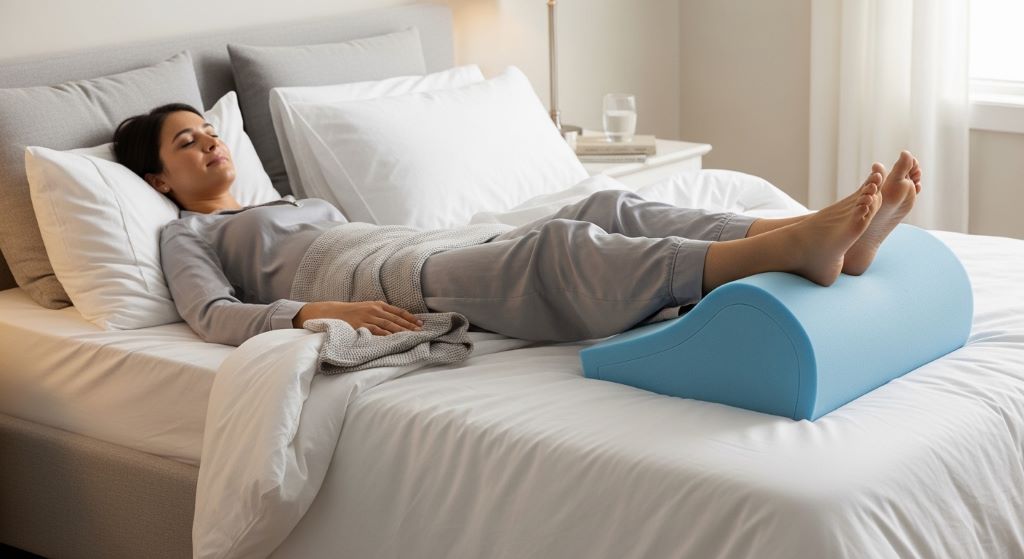
Swollen legs are more common than most people think. After a long day on your feet, a flight, or a period of illness, your legs can feel heavy, tight, and uncomfortable. The good news is that relief does not always require a trip to the doctor. Sometimes, the right pillow makes all the difference.
However, not every pillow works the same way. Choosing the wrong one can actually make swelling worse. Therefore, knowing what to look for — and what to avoid — is the first step toward real, lasting comfort.
This article will guide you through everything you need to know. From understanding why legs swell to finding the best leg support pillow for your needs, you will have clear answers by the end.
Why Legs Swell in the First Place
Before you can solve a problem, you need to understand it. Leg swelling, also called edema, happens when fluid builds up in the tissues. This can occur for many reasons.
Sitting or standing for long periods is one of the most common causes. Gravity pulls fluid downward, and without movement to push it back up, it pools in the lower legs and ankles. Pregnancy is another frequent cause, as is a high-sodium diet. In some cases, swelling signals a more serious condition such as heart disease, kidney problems, or blood clots.
If your swelling is sudden, severe, or comes with chest pain or shortness of breath, see a doctor right away. However, if it is mild and related to lifestyle, there is a lot you can do at home.
How Elevation Helps Reduce Swelling
Elevation is one of the most effective and time-tested strategies for reducing leg swelling. When you raise your legs above the level of your heart, gravity works in your favor. Fluid drains away from the lower limbs and returns to the circulatory system.
This is not just folk wisdom. Doctors and physical therapists regularly recommend elevation as a first-line approach for mild to moderate edema. Even 20 to 30 minutes of elevation per day can produce noticeable results.
Additionally, elevation reduces pressure on the veins and lymphatic vessels in your legs. This encourages better circulation overall. Over time, consistent elevation can help prevent swelling from building up as badly in the first place.
The challenge, of course, is doing it correctly. Simply propping your feet on a low stool is usually not enough. You need the right angle, the right support, and the right surface — and that is where the right pillow comes in.
What Makes a Good Leg Elevation Pillow
Not all pillows are designed for the same purpose. A regular bed pillow might offer some temporary relief, but it tends to flatten quickly and does not hold its shape well through the night. A purpose-built leg support pillow is a better investment.
Here are the key features to look for.
The Right Height and Angle
For effective elevation, your legs should ideally be raised 6 to 12 inches above heart level. Some pillows are wedge-shaped for exactly this reason. The incline gradually lifts the legs while keeping the position comfortable.
Flat pillows stacked on top of each other can work in a pinch, but they shift during sleep and rarely maintain the correct angle. A single, firm wedge pillow holds its position much better.
Firm but Comfortable Support
The pillow needs to be firm enough to actually elevate your legs without collapsing under their weight. However, it also needs to be comfortable enough to use for extended periods.
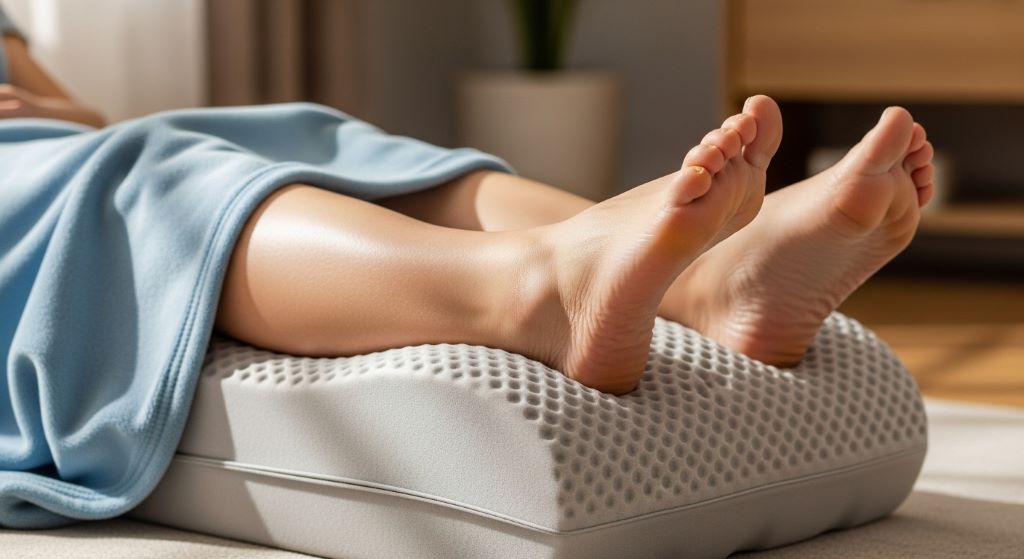
Memory foam is one of the best materials for this purpose. It conforms to the shape of your legs, distributes weight evenly, and does not lose its structure the way softer fillings do. High-density foam is another solid option. Avoid pillows filled with loose materials like buckwheat or down for elevation purposes — they compress too easily.
A Washable Cover
Your legs will be in contact with this pillow for hours. Therefore, a removable and machine-washable cover is a practical must-have. Look for covers made from breathable fabrics like cotton or bamboo. These materials reduce heat buildup and keep the skin comfortable during longer sessions.
The Right Size for Your Body
Leg elevation pillows come in different sizes. A narrow pillow may only support the ankles, leaving the calves without proper support. A wider, longer pillow that supports the full leg — from calf to heel — distributes pressure more evenly and feels more comfortable overall.
If you sleep with a partner, also consider whether the pillow will disrupt their side of the bed.
Types of Leg Pillows and Who They Suit
There is no single best design for everyone. Different shapes serve different needs.
Wedge Pillows
Wedge pillows are triangular in shape and slope upward from one end to the other. They are ideal for elevation because they maintain a consistent angle throughout the night. They work well for people who sleep on their back and want steady, reliable support without constant readjustment.
Contour Pillows
Contour pillows are shaped to follow the natural curve of the legs. They often include a raised section for the knee and a lower support area for the ankle. These are a great choice for people who experience knee discomfort alongside leg swelling.
Full-Length Body Pillows
Body pillows run the full length of the body and can be used to support the legs when placed between or under them. They are especially popular among pregnant women who need support for both the belly and the lower limbs. However, they require more space on the bed and may not provide enough height for therapeutic elevation.
Portable Inflatable Pillows
For travelers or people who spend time at the office, inflatable leg pillows offer a compact and lightweight option. They are not as effective as foam pillows for overnight use, but they are far better than nothing when you are away from home.
How to Use a Leg Pillow Correctly
Using a leg elevation pillow is simple, but there are a few tips that will help you get the most out of it.
First, position the pillow under your calves and heels, not just your ankles. Supporting the full lower leg reduces strain and improves circulation more effectively.
Second, lie flat on your back when using the pillow. Side sleeping with a leg pillow is possible but less effective for elevation. If you tend to roll onto your side during the night, a body pillow placed alongside you can help you stay in position.
Third, aim for at least 20 to 30 minutes of elevation during the day, in addition to overnight use if possible. Daytime elevation gives the body a chance to drain accumulated fluid before it becomes uncomfortable.
Finally, combine pillow use with other good habits. Stay hydrated, reduce salt intake, and take short walks throughout the day. Movement is one of the most effective ways to keep fluid from pooling in the legs.
Home Remedies That Work Alongside Elevation
A good pillow is a powerful tool, but it works even better when paired with supportive lifestyle habits. Several home remedies for edema have a strong track record of helping reduce swelling naturally.
Staying well-hydrated is perhaps the most overlooked one. It might seem counterintuitive to drink more water when your body is retaining fluid, but dehydration actually makes edema worse. When the body senses it is not getting enough water, it holds on to whatever it has.
Reducing sodium intake is equally important. Salt causes the body to retain water, which worsens swelling. Even small reductions in daily salt consumption can produce visible changes in leg swelling within a few days.
Compression socks are another useful addition. They apply gentle pressure to the lower legs, which helps push fluid upward and reduces pooling. Many people find that wearing compression socks during the day and using an elevation pillow at night creates the best results.
Gentle exercise — particularly walking, cycling, or swimming — activates the calf muscles, which act as a pump to move blood and lymphatic fluid back toward the heart. Even 10 to 15 minutes of light walking per day can have a meaningful impact.
Cold and warm water therapy is one of the most effective home remedies for edema as well. Alternating between a brief cold soak and a warm soak encourages blood vessels to contract and expand, which stimulates circulation. This is easy to do at home with two basins of water.
Magnesium-rich foods like leafy greens, nuts, and seeds may also help, as magnesium plays a role in fluid balance. Some studies suggest that low magnesium levels are linked to increased fluid retention.
When to See a Doctor
Most mild swelling responds well to elevation, lifestyle changes, and a quality leg support pillow. However, there are warning signs that should prompt a medical visit.
See a doctor if the swelling is in only one leg, as this can indicate a blood clot. Also seek help if the skin over the swollen area becomes red, warm, or breaks down. Swelling that is getting progressively worse over days or weeks, or that is accompanied by fatigue and shortness of breath, also warrants professional evaluation.
A doctor can identify whether the swelling is caused by an underlying condition that needs treatment. In those cases, a pillow alone will not be enough.
Choosing the Right Pillow: A Simple Checklist
To make the buying process easier, here is a quick list of what to look for.
- Height of at least 6 inches for effective elevation
- High-density or memory foam construction
- Removable and washable cover
- Full leg coverage from calf to heel
- A firm structure that holds its shape through the night
- Breathable fabric to prevent heat buildup
If a product checks all of these boxes, it is likely a solid choice. Reading verified customer reviews is also helpful, especially comments from people who specifically mention using the pillow for leg swelling.
Conclusion
Swollen legs can make daily life uncomfortable, but relief is often closer than you think. Elevation is one of the most effective and accessible strategies available, and a good leg support pillow is the tool that makes it work.
When choosing a pillow, prioritize firm support, the right height, full leg coverage, and a washable cover. Pair it with proven home habits like staying hydrated, reducing salt, wearing compression socks, and getting gentle daily movement.
For most people dealing with mild edema, these steps will produce noticeable improvement within days. Combined with the right home remedies for edema, a quality elevation pillow is one of the smartest investments you can make for your comfort and health. If your swelling is persistent or severe, however, always consult a medical professional to rule out underlying causes.
Small changes, done consistently, lead to real results. Your legs will thank you.
Frequently Asked Questions
How long should I elevate my legs to reduce swelling?
Most experts recommend elevating your legs for at least 20 to 30 minutes, two to three times per day. Overnight elevation while sleeping can provide additional relief, especially if swelling is persistent.
Can a regular pillow work for leg elevation?
A regular pillow can offer temporary relief, but it tends to flatten and shift during sleep. A purpose-built wedge or contour pillow is far more effective because it holds its shape and maintains the correct elevation angle throughout the night.
Is leg swelling always a sign of a serious health problem?
Not always. Mild swelling is often caused by prolonged sitting or standing, heat, or a high-sodium diet. However, swelling in one leg only, or swelling accompanied by pain, redness, or breathing difficulty, should be evaluated by a doctor.
What is the best sleeping position to reduce leg swelling?
Sleeping on your back with your legs elevated above heart level is the most effective position. Using a wedge pillow under your calves and heels makes this position comfortable and sustainable throughout the night.
Do compression socks work better than a leg elevation pillow?
Both methods are effective, and they work best when used together. Compression socks keep fluid from pooling during the day, while an elevation pillow helps drain accumulated fluid at rest. Combining both approaches typically produces the fastest and most noticeable results.
Related Topics:
How to Monitor Crop Health Using Satellites Easily
How to Prevent Seasonal Allergies Naturally