
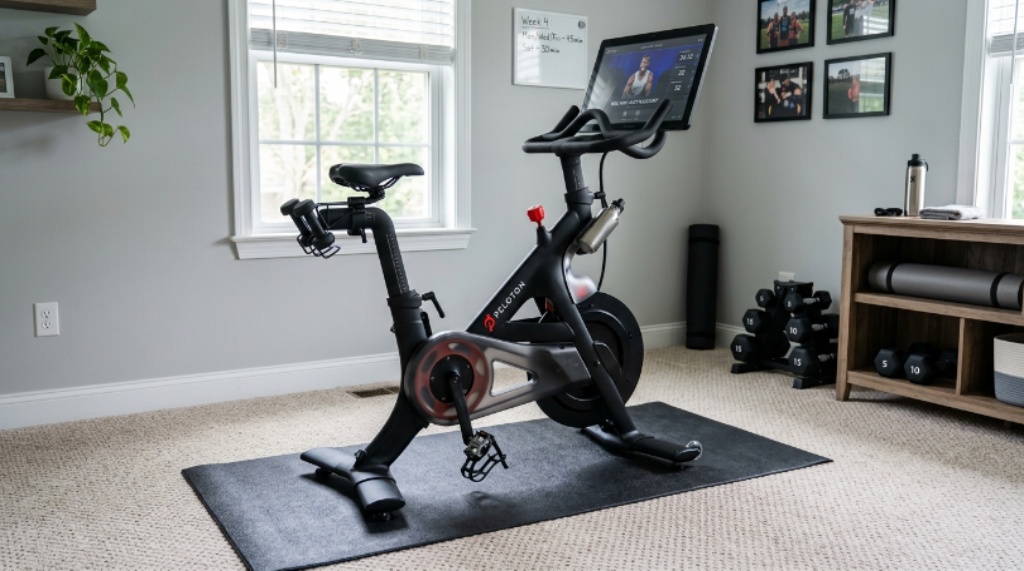
Setting up an indoor bike at home is one of the best decisions a fitness enthusiast can make. You get the convenience of training anytime, without the weather or traffic. However, there is a problem many cyclists overlook until it is too late: the damage that cycling equipment causes to carpet.
Stationary bikes and turbo trainers are heavy. They vibrate constantly during use. They accumulate sweat and moisture. Over time, all of this causes serious and sometimes permanent damage to the carpet underneath. Fibres flatten, dyes fade, moisture seeps into the underlay, and unpleasant odours develop.
The good news is that protecting your carpet is simple and affordable. You just need to know what to use and why it matters. This guide covers everything you need to keep your flooring in perfect condition while enjoying your indoor training sessions without worry.
The Real Damage Indoor Cycling Does to Carpet
Before looking at solutions, it helps to understand exactly what is happening to your carpet during a cycling session. Most people assume the risk is minor. In reality, several different forces are working against your flooring at the same time.
Weight and Pressure
A typical turbo trainer or stationary bike weighs between 15 and 30 kilograms. When you add your own body weight during a session, the total load pressing down on the carpet can exceed 100 kilograms. This pressure concentrates on the small contact points where the bike’s feet touch the floor.
Over weeks and months, this crushes carpet fibres permanently. The affected areas become visibly flattened and discoloured compared to the surrounding carpet, and no amount of vacuuming or brushing will restore them to their original condition.
Vibration and Movement
Even when a bike is locked into a resistance trainer, it vibrates and shifts slightly during hard efforts. This constant micro-movement causes the equipment’s feet to grind against carpet fibres repeatedly. The friction degrades the fibres and can eventually wear through the top layer entirely, exposing the backing underneath.
Additionally, any lateral rocking during sprints or climbs amplifies this effect. The harder you push during a session, the more stress the carpet experiences.
Sweat and Moisture
Sweat is corrosive. It contains salts, acids, and biological compounds that break down both carpet fibres and the adhesive backing underneath them. During a typical 45-minute indoor cycling session, a cyclist can produce 500 millilitres to over a litre of sweat. Without a barrier, much of that moisture soaks directly into the carpet.
Over time, persistent moisture causes mould and mildew to grow in the underlay, which is both a health concern and a structural problem. It also creates stubborn odours that are extremely difficult to remove without professional cleaning.
Why a Mat Is the Most Effective Solution
The simplest and most reliable way to protect carpet from indoor cycling equipment is to place a purpose-built mat between the bike and the floor. A good mat addresses all three damage sources at once. It distributes weight, absorbs vibration, and creates a waterproof or water-resistant barrier against sweat and moisture.
Not all mats are created equal, however. Choosing the right type for your specific setup makes a meaningful difference in performance and longevity.
Equipment Mats Designed for Cycling
Equipment mats designed specifically for indoor cycling are thicker and denser than standard gym mats. They are typically made from high-density EVA foam or dense rubber compound. These materials compress under load but do not flatten permanently, which means they continue to protect the carpet evenly even after months of regular use.
A purpose-built carpet protector mat sits firmly on the floor, does not slip during movement, and resists moisture absorption. Most are sized to accommodate the full footprint of a stationary bike or turbo trainer setup, giving you coverage both under the equipment and in front of the pedalling area where sweat tends to drip.
Thickness and Density Matter
For carpet protection specifically, thickness and density are the two most important properties. A mat that is too thin will compress fully under load and transfer the pressure directly through to the carpet, defeating its purpose. Look for a minimum thickness of 6 millimetres for light use and 8 to 10 millimetres for heavier riders or more intense training.
Density refers to how much material is packed into a given volume. A high-density mat holds its structure under repeated compression, whereas a low-density mat degrades quickly and loses its protective properties within months.
Choosing a Sweat-Resistant Mat for Indoor Cycling
Sweat management is one of the most important but least discussed aspects of carpet protection. A standard foam mat absorbs moisture freely. This might feel comfortable underfoot, but it creates a damp environment where bacteria and mould thrive. A sweat-resistant mat solves this problem with a non-porous or sealed surface that prevents moisture from penetrating the material.
When shopping for a mat with sweat resistance, look for these features.
- A smooth, closed-cell surface that repels moisture rather than absorbing it.
- A textured top layer that provides grip for your feet without trapping sweat or debris.
- Easy wipe-clean properties so that post-session cleanup takes less than a minute.
- An odour-resistant treatment or naturally odour-neutral material like natural rubber.
Additionally, some mats feature a raised lip or border around the edges that prevents sweat from running off onto the surrounding carpet. This is a particularly useful feature for high-intensity sessions where moisture levels are high.
Understanding Bike Stand Accessories That Work With Your Mat
A mat alone provides excellent protection, but pairing it with the right bike stand accessories improves stability, reduces vibration transmission further, and extends the life of both your mat and your equipment.
Riser Blocks and Front Wheel Supports
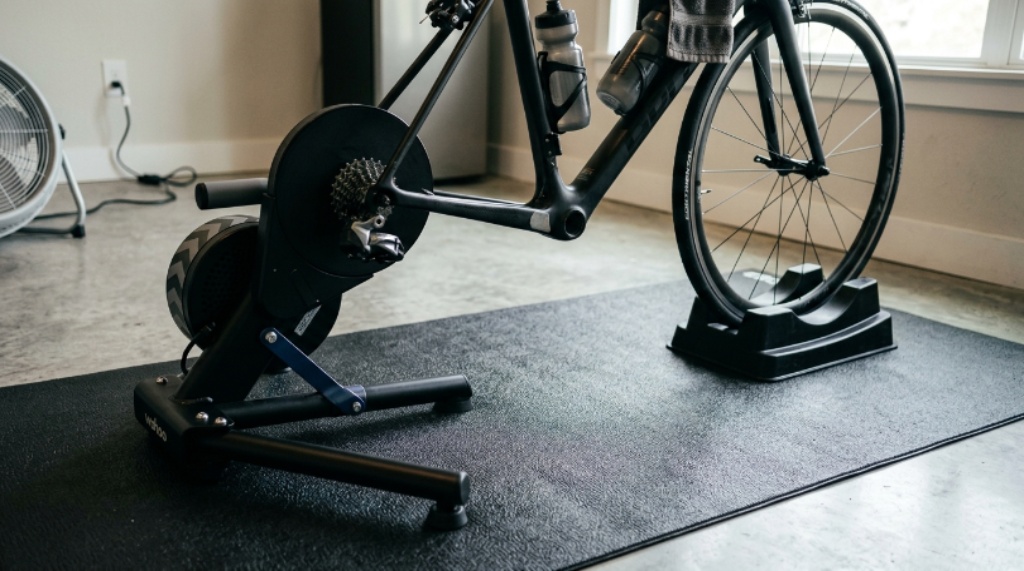
If you use a turbo trainer rather than a stationary bike, your rear wheel sits elevated on the trainer while your front wheel rests on the floor. This creates an uneven riding position unless you use a riser block to lift the front wheel to the same height. A riser block should always be positioned on top of your mat, not on the bare carpet. This keeps it stable and ensures the mat protects the area beneath it as well.
Many riser blocks are designed as bike stand accessories that stack or adjust to different heights, giving you precise control over your riding position. This is both a comfort benefit and a stability benefit, since a level bike moves less during use and causes less stress on the carpet underneath.
Vibration Dampening Feet
Some turbo trainers and stationary bikes come with basic rubber feet. Replacing these with aftermarket vibration-dampening feet significantly reduces the noise and mechanical stress transmitted through the mat and into the floor. These accessories are small and inexpensive but deliver a noticeable improvement in both carpet protection and noise reduction for anyone training in a flat or shared building.
Sweat Nets and Handlebar Covers
Sweat does not only fall straight down. It runs along your arms, off your handlebars, and drips from your face onto the top tube and stem of your bike. A sweat net is a fabric sleeve that fits over the frame of your bike and catches this moisture before it reaches the mat or the floor. Combined with a good mat, a sweat net keeps your entire training area cleaner and easier to maintain.
Sizing and Positioning Your Mat Correctly
Even the best mat provides limited protection if it is the wrong size or placed incorrectly. This is a common mistake that leaves parts of the carpet exposed and vulnerable.
Your mat should extend at least 30 centimetres beyond the footprint of your bike in every direction. This accounts for the subtle movement and rocking that occurs during intense efforts. It also covers the area directly in front of the bike where you might stand when mounting and dismounting, and where sweat most commonly drips during a session.
For turbo trainer setups, the mat should cover the full length from the front wheel riser to the back of the trainer unit. Measure this distance before purchasing and add 20 to 30 centimetres to each end. A mat that is too small is only marginally better than no mat at all.
Position the mat on a flat, clean section of carpet. Vacuum the area thoroughly before placing the mat, as debris trapped underneath can create pressure points that damage the carpet over time. Additionally, check the mat’s position periodically and straighten it if it has shifted during sessions.
Maintaining Your Mat and Keeping the Carpet Clean
A mat is only effective when it is maintained properly. Neglecting your mat leads to a build-up of sweat, bacteria, and debris that eventually creates its own odour and hygiene problems.
Wipe the surface of your mat with a damp cloth after every session. For a deeper clean, use a mild detergent solution and rinse thoroughly with clean water. Allow the mat to dry completely before placing it back on the carpet. Placing a damp mat on carpet traps moisture underneath and recreates the very problem you are trying to prevent.
Lift the mat once a week and vacuum the carpet section underneath. This removes any dust, sweat residue, or debris that has worked its way under the edges. It also allows the carpet fibres to breathe and recover from compression.
Conclusion
Protecting your carpet from indoor cycling equipment is straightforward once you understand the risks and the solutions. The three main threats are weight and pressure, vibration and movement, and sweat and moisture. A purpose-built carpet protector mat addresses all three simultaneously, making it the single most important investment for any home cyclist training on carpet.
Choose a mat with the right thickness, high density, and a sweat-resistant surface. Pair it with appropriate bike stand accessories such as riser blocks and vibration-dampening feet to reduce stress on both the mat and the floor beneath it. Size your mat generously and maintain it regularly to keep it performing at its best.
Your carpet is an expensive and important part of your home. A quality mat costs a fraction of what carpet replacement or professional cleaning would set you back. Invest in protection now, and both your flooring and your training space will remain in excellent condition for years to come.
Frequently Asked Questions
What thickness of mat do I need to protect carpet from a stationary bike?
For most setups, a mat between 6 and 10 millimetres thick is sufficient. Lighter riders doing moderate sessions can use a 6-millimetre mat. Heavier riders or those doing intense, frequent sessions will benefit more from an 8 to 10-millimetre option that better resists permanent compression.
Can I use a yoga mat instead of a purpose-built cycling mat?
A yoga mat provides very limited protection compared to a purpose-built equipment mat. Yoga mats are thin, low-density, and not designed to handle concentrated loads or significant sweat volume. They compress fully under the weight of a bike and absorb moisture readily. A proper equipment mat is a much more effective and durable solution.
How do I stop my mat from sliding on carpet during a session?
Most purpose-built equipment mats have a textured or rubberised underside that grips carpet fibres and resists movement. If your mat continues to slide, you can place a non-slip rug gripper pad beneath it for additional stability. Ensure the mat is large enough that it does not shift off the gripped area during movement.
How often should I clean the mat under my indoor bike?
Wipe the surface down after every session to prevent sweat residue from building up. Do a more thorough clean with mild detergent once a week. Lift the mat and vacuum the carpet underneath at least once a week as well to prevent debris accumulation and allow the carpet fibres to recover.
Will a mat fully prevent carpet damage over the long term?
A quality mat will prevent the vast majority of damage caused by cycling equipment. However, no mat eliminates all compression over many years of use. To further reduce the risk, periodically move the mat slightly so that the same carpet fibres are not under constant compression, and check underneath regularly for any signs of moisture or wear.