
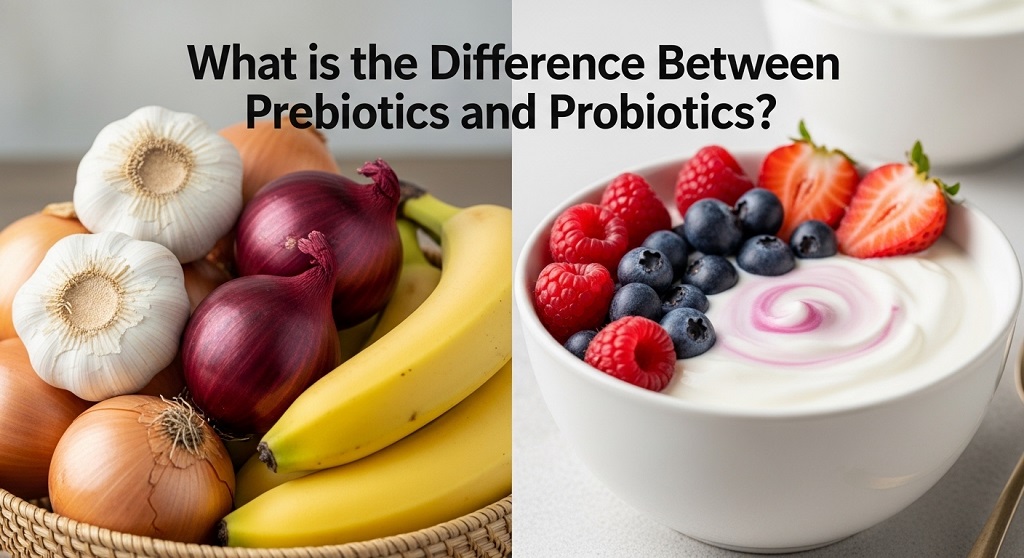
Prebiotics are fibers that feed beneficial gut bacteria, while probiotics are live beneficial bacteria themselves that support digestive and immune health. Both improve the gut microbiome, but they work in different ways and are most effective when used together.
Why understanding prebiotics vs probiotics matters for your gut health
Digestive discomfort, low energy, frequent illness, and even mood swings often trace back to one hidden issue: an imbalanced gut microbiome. Many people take supplements labeled “probiotics” expecting instant results, but overlook prebiotics—the nutrients those bacteria need to survive. Without both, gut health strategies remain incomplete.
Prebiotics are non-digestible plant fibers that nourish beneficial bacteria, while probiotics are live microorganisms that add helpful bacteria to your digestive system. Together, they support digestion, immunity, metabolism, and mental wellness through the gut-brain axis.
Research from the National Institutes of Health shows the human gut contains trillions of microbes influencing everything from inflammation levels to nutrient absorption. Understanding how prebiotics and probiotics differ—and how they work together—helps you choose foods and supplements more effectively.
This guide explains the differences, benefits, food sources, timing strategies, and how to use both for optimal gut health.
What are prebiotics?
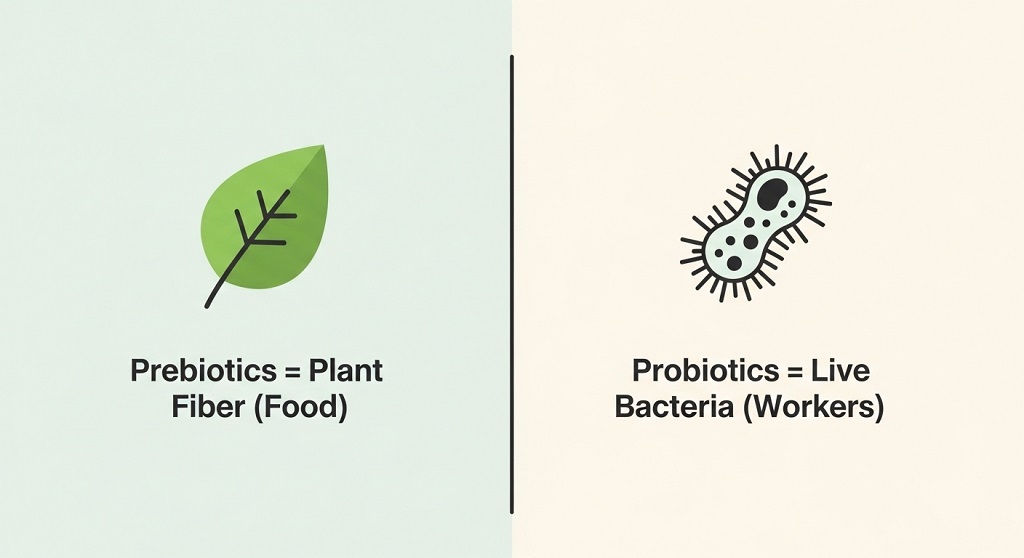
Prebiotics are non-digestible fibers that act as food for beneficial gut bacteria, helping them grow and function effectively.
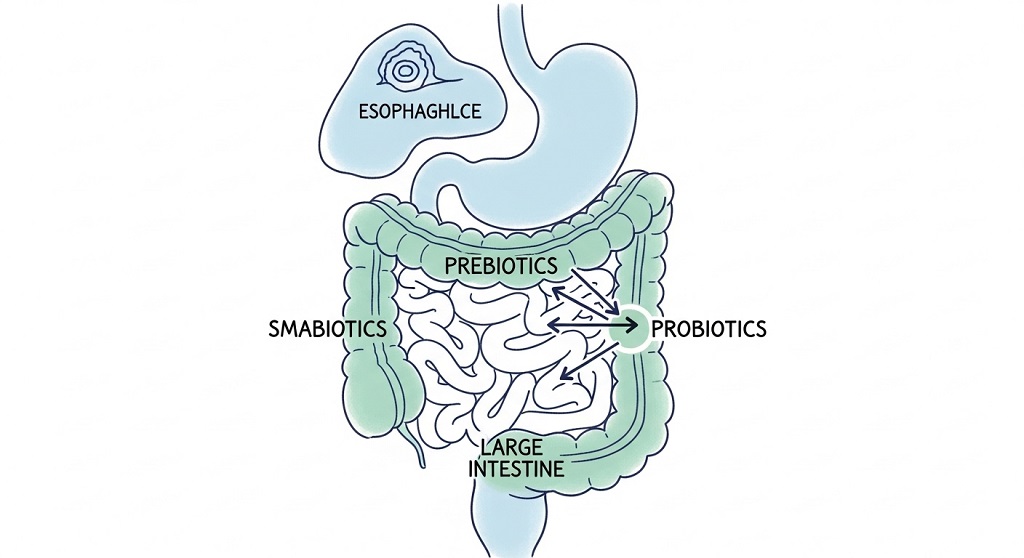
Unlike most carbohydrates, prebiotics pass through the upper digestive tract without being broken down. When they reach the colon, they feed helpful microbes such as Bifidobacteria and Lactobacillus.
This fermentation process produces short-chain fatty acids (SCFAs) like butyrate, acetate, and propionate. These compounds strengthen the intestinal lining and reduce inflammation.
Which foods contain natural prebiotics?
Prebiotic-rich foods include garlic, onions, bananas, oats, apples, asparagus, and chicory root.
- Garlic
- Onions
- Leeks
- Bananas (especially slightly green)
- Asparagus
- Whole oats
- Barley
- Apples
- Flaxseeds
- Chicory root
These foods contain inulin, resistant starch, and fructooligosaccharides (FOS), which selectively stimulate beneficial bacteria growth.
What do prebiotics do for the body?
Prebiotics improve digestion, enhance mineral absorption, strengthen immunity, and support metabolic health.
- Increase calcium absorption
- Support colon health
- Reduce inflammation
- Improve insulin sensitivity
- Enhance satiety and weight regulation
- Support healthy bowel movement patterns
Studies published in Nutrients Journal show prebiotic intake can significantly increase beneficial bacterial populations within weeks.
What are probiotics?
Probiotics are live beneficial bacteria that help restore balance in the gut microbiome.
These microorganisms support digestion by crowding out harmful bacteria and producing protective compounds that maintain intestinal health.
Common probiotic strains include:
- Lactobacillus acidophilus
- Bifidobacterium bifidum
- Saccharomyces boulardii
- Lactobacillus rhamnosus
- Bifidobacterium longum
Each strain supports different health outcomes, including immune defense, digestion improvement, and mental wellness.
Which foods contain probiotics naturally?
Fermented foods such as yogurt, kefir, kimchi, and sauerkraut contain natural probiotics.
- Yogurt with live cultures
- Kefir
- Kimchi
- Sauerkraut
- Miso
- Tempeh
- Kombucha
Regular intake of fermented foods helps maintain microbial diversity inside the digestive tract.
What is the main difference between prebiotics and probiotics?
Prebiotics feed beneficial bacteria already in your gut, while probiotics introduce new beneficial bacteria into your system.
| Feature | Prebiotics | Probiotics |
|---|---|---|
| Definition | Fiber that feeds gut bacteria | Live beneficial bacteria |
| Function | Stimulate bacterial growth | Add beneficial microbes |
| Found in | Plant-based foods | Fermented foods |
| Digestibility | Not digested by humans | Survive digestion to colonize gut |
| Primary role | Nourish microbiome | Balance microbiome |
Using both together creates a synbiotic effect, meaning they enhance each other’s benefits.
Do you need both prebiotics and probiotics?
Yes, combining prebiotics and probiotics improves gut microbiome diversity and long-term digestive health more effectively than using either alone.
Probiotics cannot survive long without nourishment. Prebiotics provide that fuel, helping beneficial bacteria multiply and stay active.
Clinical studies show synbiotic combinations improve:
- Immune response
- Digestive regularity
- Gut barrier integrity
- Nutrient absorption
- Inflammation markers
How do prebiotics and probiotics support immune health?
They strengthen immune defenses by improving microbial balance and supporting the gut lining where most immune activity occurs.
Approximately 70% of immune cells are located in the gastrointestinal tract. Beneficial microbes help regulate immune signaling and reduce pathogen growth.
Short-chain fatty acids produced from prebiotic fermentation also reduce chronic inflammation linked to autoimmune disease.
Can prebiotics and probiotics improve mental health?
Yes, both influence the gut-brain axis, which connects intestinal bacteria with mood, stress levels, and cognitive performance.
Gut bacteria produce neurotransmitters including serotonin, dopamine, and gamma-aminobutyric acid (GABA).
Research published in Frontiers in Psychiatry suggests probiotic supplementation may reduce symptoms of anxiety and depression in some individuals.
Are prebiotics better than probiotics for digestion?
Neither is better alone; prebiotics support long-term microbiome health while probiotics provide faster short-term digestive balance.
For example:
- Prebiotics improve bowel regularity gradually
- Probiotics help reduce diarrhea quickly
- Prebiotics strengthen colon lining
- Probiotics restore microbiome after antibiotics
Using both together produces stronger digestive outcomes.
Should you take prebiotics and probiotics after antibiotics?
Yes, probiotics help restore beneficial bacteria lost during antibiotic treatment, while prebiotics support their regrowth.
Antibiotics reduce both harmful and beneficial microbes. Recovery may take weeks without dietary support.
A combined strategy speeds restoration of microbiome diversity.
Are supplements necessary or are foods enough?
Most people can meet their needs through diet, but supplements help during illness, stress, travel, or antibiotic use.
Whole foods provide additional nutrients like polyphenols and antioxidants that enhance microbiome diversity.
However, targeted supplements may benefit individuals with:
- Irritable bowel syndrome (IBS)
- Frequent infections
- Digestive discomfort
- Chronic stress
- Poor dietary variety
What are synbiotics and how do they relate to prebiotics and probiotics?
Synbiotics are products that combine prebiotics and probiotics to improve bacterial survival and effectiveness.
Examples include yogurt with added inulin or supplements pairing Lactobacillus strains with resistant starch.
Synbiotics help beneficial bacteria colonize the gut more efficiently.
Can prebiotics and probiotics help with weight management?
Yes, both influence metabolism, appetite hormones, and fat storage through microbiome regulation.
Studies link higher microbial diversity with improved insulin sensitivity and lower obesity risk.
Prebiotics increase production of satiety hormones like GLP-1 and peptide YY, which reduce overeating.
National Institutes of Health : Probiotics: What You Need To Know
Conclusion: How to choose between prebiotics and probiotics for better health
Prebiotics and probiotics are not competing solutions. They are complementary tools for building a resilient gut microbiome. Probiotics introduce beneficial bacteria, while prebiotics nourish them so they thrive.
A simple strategy works best: eat fiber-rich plant foods daily and include fermented foods several times each week. When necessary, supplements can support recovery after illness or antibiotic use.
Improving gut health improves digestion, immunity, metabolism, and mental clarity. Start small by adding one fermented food and one prebiotic-rich ingredient to your routine today. Over time, these changes create measurable health benefits.
Frequently Asked Questions about prebiotics vs probiotics
Which is more important: prebiotics or probiotics?
Both are equally important because probiotics add beneficial bacteria while prebiotics help those bacteria survive and grow.
Can you take prebiotics and probiotics together?
Yes, taking them together improves gut microbiome balance more effectively than using either alone.
Do prebiotics cause gas or bloating?
Yes, some people experience temporary bloating when increasing fiber intake, but symptoms usually disappear as gut bacteria adapt.
How long does it take probiotics to work?
Some digestive improvements appear within days, but long-term microbiome changes typically take several weeks.
Are prebiotics safe daily?
Yes, daily intake from whole foods supports consistent digestive and immune health.
Can children take prebiotics and probiotics?
Yes, both support developing immune systems, especially when provided through natural foods like yogurt and fruits.
Read More Also: How much could you save on office lunches?
Discover More: How to give an amazing presentation