
Key Takeaways
- Luxury condo buyers are evaluating wellness, service, privacy, culture, and convenience alongside views and finishes.
- A long amenity list matters less than consistent operations, easy access, and services residents will genuinely use.
- Association fees, insurance, reserves, rental restrictions, and resilience planning should be reviewed before signing.
- Branded residences can deliver hospitality-style living, but buyers should confirm what the brand actually manages.
- Location remains central to long-term enjoyment and resale appeal.
Miami’s luxury condominium market is increasingly centered on the complete ownership experience. Buyers still want waterfront views, thoughtful interiors, and desirable addresses, but many now ask how a building supports rest, fitness, work, entertaining, privacy, and everyday efficiency.
For buyers researching residences where these ideas come together, Miami FL real estate experts Faena Residences offer information on Faena Residences, a Miami River residential project focused on art-infused spaces, hospitality-style service, wellness amenities, and curated social settings. With a sales gallery planned at 90 SW 3rd Street in Miami, the brand provides a useful local reference point for comparing lifestyle-led luxury living in Downtown Miami and the wider South Florida market.
Why Miami’s Luxury Condo Buyer Is Asking Different Questions
Today’s affluent buyer is often purchasing more than a residence. They may be seeking a second home that feels effortless upon arrival, a primary home that reduces the friction of a demanding schedule, or a property that brings fitness, dining, culture, and social connection closer to home. As a result, the conversation has shifted from “How large is the unit?” to “How will life here actually work?”
That shift has helped make wellness-led and service-led buildings more visible across Miami. Still, buyers should separate a compelling marketing concept from a durable daily experience. The right building is not necessarily the one with the most amenities. It is the one whose operations, design, and costs fit the owner’s real habits.
What “Wellness-Focused” Really Means
Wellness should mean more than a gym with premium equipment or a spa name on a brochure. In a well-planned condominium, it can include:
- Natural light, fresh-air access, and shaded outdoor living areas.
- Quiet spaces for meditation, reading, recovery, or focused work.
- Fitness facilities with room for strength training, movement, and private instruction.
- Thermal amenities such as saunas, steam rooms, cold plunges, and treatment rooms.
- Healthy dining options, hydration stations, and practical concierge support.
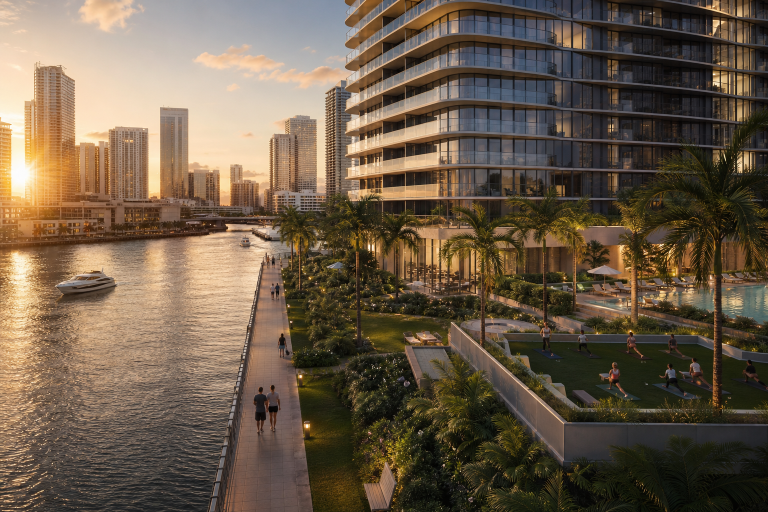
- Walking access to parks, waterfront paths, dining, and cultural destinations.
Ask how these spaces are staffed, cleaned, scheduled, and maintained. A beautiful amenity floor that is difficult to reserve, crowded at peak hours, or costly to operate may add less value than a smaller, better-managed program.
Five Features Buyers Should Review Closely
1. Service Standards
A front desk is not the same as a true service platform. Ask about concierge availability, valet procedures, package handling, guest access, housekeeping coordination, in-residence dining, and response times for maintenance requests. Service should feel clear and dependable, not vague or dependent on informal promises.
2. Wellness Operations
Find out who runs the fitness, spa, and recovery spaces. An experienced operator can bring programming and professional oversight, but buyers should understand whether classes, treatments, trainers, or reservations carry separate charges.
3. Design And Privacy
Private elevators, sound insulation, shaded terraces, intelligent floor plans, and separation between residents and public visitors can improve daily life more than decorative finishes. During a tour, listen for noise, examine sightlines, and consider whether the layout works when hosting guests or working from home.
4. Cultural And Social Programming
Art displays, private dinners, tastings, talks, and resident gatherings can make a building feel more connected. Ask whether events are included in association fees, optional, or separately billed. A buyer who values quiet may prefer a more restrained calendar and fewer shared venues.
5. Building Resilience
Storm protection, backup power, drainage, maintenance planning, insurance, and reserve funding deserve the same attention as interior design. Buyers should review Miami-Dade County flood zone maps, then discuss the specific building’s systems, flood exposure, emergency procedures, and insurance assumptions with qualified professionals.
How To Judge A Branded Residence Without Overpaying For The Name
A recognized brand may provide design direction, hospitality standards, and broader market awareness. It does not automatically guarantee better value, stronger resale performance, or lower operating costs. Before paying a premium, buyers should:
- Confirm whether the brand manages daily operations or licenses its name.
- Compare monthly fees with the actual services provided.
- Review rental rules, owner-use limits, and any hospitality program.
- Research the developer, management team, and delivery history.
- Compare similar nearby non-branded buildings on location, services, and cost.
Why Art And Design Can Add Real Value
Thoughtful art and design can create a stronger sense of place. A well-composed lobby, garden, riverwalk, lounge, or private dining room can improve comfort, movement, and social connection. The important distinction is whether design serves residents or simply photographs well. Materials, lighting, acoustics, circulation, and privacy all affect how a building feels years after opening.
The Financial Questions To Ask Before Buying
Purchase price is only one part of the ownership equation. Request documentation and clarify the following:
- Projected association fees and what they include.
- Expected property taxes, insurance, parking, and utility costs.
- Separate charges for valet, wellness services, dining, housekeeping, or storage.
- Reserve funding, future repair plans, and possible assessments.
- Furniture package requirements and customization policies.
- Rental restrictions, leasing approval requirements, and occupancy limits.
Questions To Ask During A Private Tour
- Who will manage the building after completion?
- How many staff members serve residents during the day and overnight?
- Which amenities operate year-round, and which require reservations?
- How are deliveries, contractors, guests, and privacy handled?
- What happens during a major storm or power interruption?
- Which fees could change after opening?
- How does this project compare with completed buildings nearby?
Common Buyer Mistakes
- Choosing solely based on a view, floor height, or rendering.
- Assuming a prominent brand guarantees investment performance.
- Ignoring recurring costs and future assessment risk.
- Overlooking traffic, construction activity, neighborhood access, and noise.
- Failing to compare at least three properties before making a decision.
A Simple Decision Framework For 2026 Buyers
Start by defining the home’s purpose: a full-time residence, a seasonal retreat, a rental property, or a future resale asset. Then rank the services you will use weekly, calculate the full cost of ownership, visit the neighborhood at different times, review contracts and disclosures carefully, and compare alternatives. The strongest purchase is usually the one that supports real routines, not an imagined lifestyle.
Common Questions From Readers
Are wellness amenities worth the added cost?
They can be, especially for owners who will regularly use fitness, recovery, outdoor, and concierge services. Their value declines when spaces are underused or monthly fees outweigh practical benefit.
Do branded residences always hold value better?
No. Brand recognition can support demand, but location, construction, management, fees, supply, and market conditions remain important.
What matters more: amenities or location?
Location usually has the stronger long-term effect. Amenities can elevate daily living, but they cannot fully overcome poor access, heavy traffic, or limited neighborhood appeal.
Conclusion
Miami’s wellness-focused condo market rewards buyers who look beyond polished amenities and study the complete ownership experience. Service, wellness, art, privacy, resilience, and financial clarity can all create meaningful value when they are thoughtfully planned and properly managed. Choose the residence that matches your real life, not just the excitement of its launch.