
Key Takeaways
- Warm weather can increase pest activity in kitchens, bathrooms, basements, garages, and outdoor spaces.
- Most prevention begins by removing food sources, reducing moisture, and sealing entry points.
- A room-by-room check can catch small issues before they become harder to manage.
- Standing water should be addressed weekly to limit mosquito breeding areas.
- Prevention and monitoring can reduce the need for routine pesticide applications.
Summer brings more time outdoors, open doors, backyard meals, humidity, and sudden rainstorms. Those same conditions can make a home more appealing to insects and rodents looking for food, water, shade, or shelter. For local help with a persistent concern, homeowners can visit the website to explore professional pest control options. A single ant or fly does not automatically mean there is an infestation. Repeated sightings, new damage, droppings, nests, or pests appearing in several rooms deserve closer attention. A practical inspection works best when it focuses on the conditions pests need most: food, moisture, shelter, and openings that let them inside.
Why Summer Brings More Pest Activity
Heat, humidity, rain, and longer daylight hours can all change pest behavior. Ants may follow moisture into kitchens, flies may gather around food waste, and rodents may look for cooler, protected places to rest. Activity varies by region, weather, landscaping, and property condition, so the goal is not to expect a completely pest-free outdoor environment. Instead, identify patterns and make the home less inviting.
A prevention-first strategy follows the integrated pest management principles that emphasize inspection, accurate identification, prevention, and targeted control when truly needed.
Start Outside Before Checking Inside
Many indoor pest issues begin around the exterior. Walk slowly around the foundation, siding, doors, and roofline. Look for cracks, gaps around pipes and utility lines, torn window screens, damaged vent covers, and worn door sweeps. Check that windows close tightly, and that exterior doors do not leave visible daylight around their edges.
- Trim branches and shrubs so they do not touch the roof or siding.
- Move firewood, leaf piles, lumber, and stored materials away from the foundation.
- Clear gutters and downspouts so water drains away from the house.
- Watch for puddles, leaking spigots, wet soil, or mulch kept too deep against siding.
Kitchen: Remove Easy Food Sources
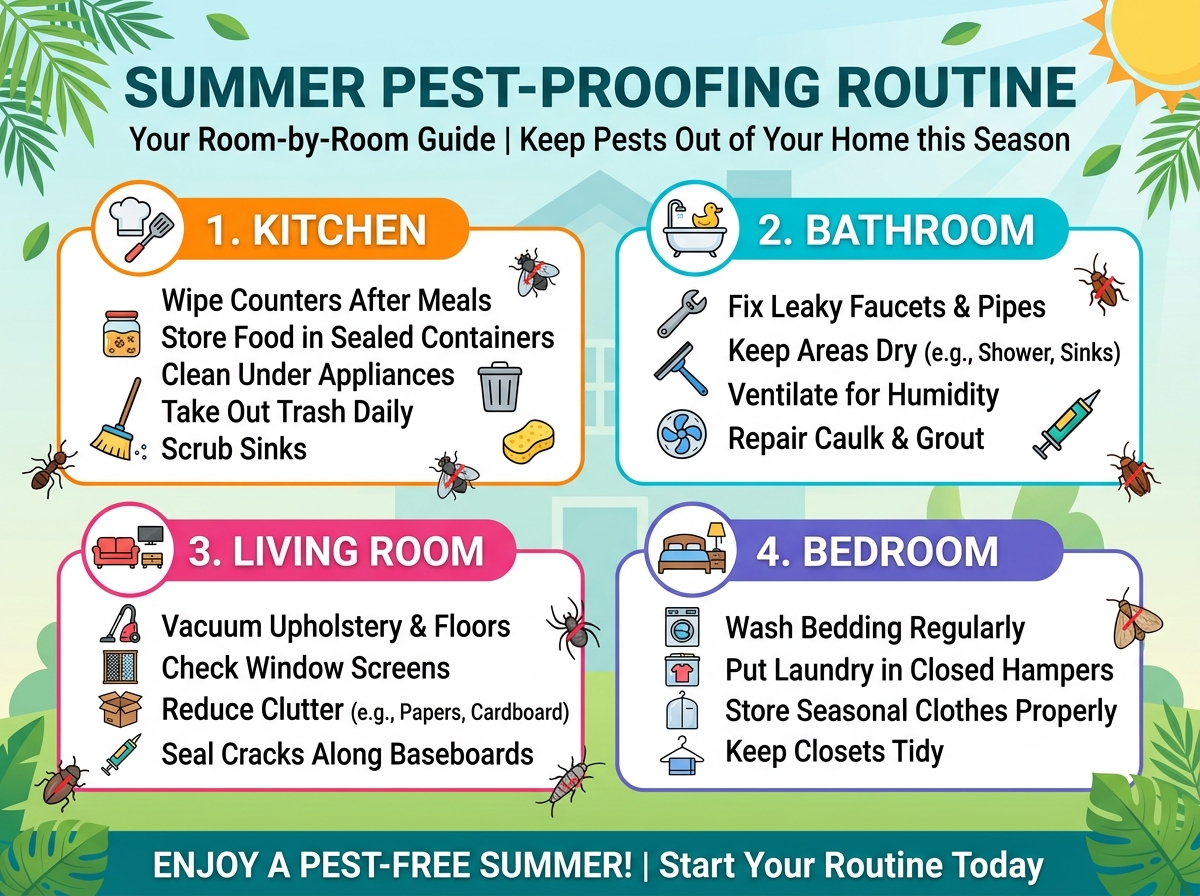
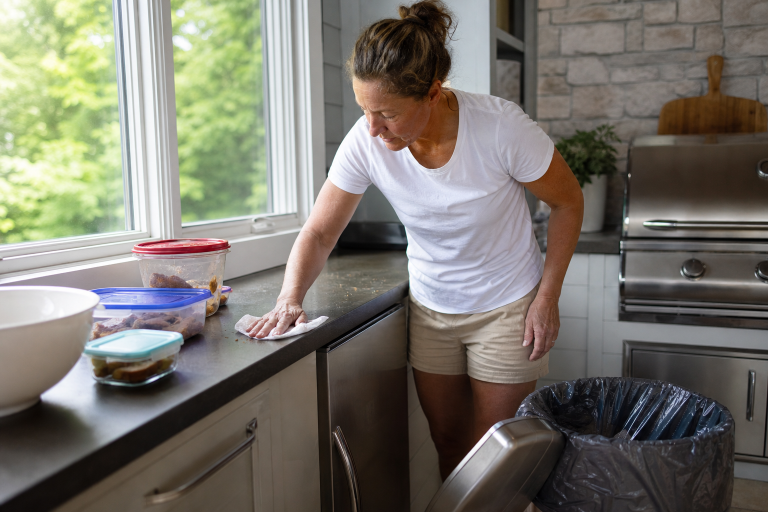
Kitchens attract ants, cockroaches, pantry pests, and flies because crumbs, grease, food packaging, and water are often available in one place. Wipe counters after meals, clean spills promptly, and sweep beneath eating areas. Empty trash regularly and use a lid that closes securely.
- Store grains, sugar, snacks, and pet food in sealed containers.
- Clean beneath appliances and inside lower cabinets.
- Inspect pantry packages for holes, webbing, insects, or unusual clumping.
- Check under the sink for slow leaks, damp wood, or plumbing gaps
.
Bathroom: Watch for Moisture
Bathrooms can provide the damp conditions that attract small flies and other moisture-seeking pests. Inspect pipes, drains, toilet bases, cabinet floors, and floor-level openings around plumbing. Repair loose caulk around tubs, showers, and sinks, and run the exhaust fan during showers and afterward when possible.
- Hang towels and bath mats so they dry fully.
- Clean slow drains where organic buildup can collect.
- Check behind toilets and beneath vanities for hidden dampness.
Basement, Crawl Space, and Laundry Areas
Dark, quiet, and humid spaces can become hiding places for insects and rodents. Look for condensation, damp walls, musty odors, leaks, webs, shed skins, droppings, and gnaw marks. Keep stored items off the floor when practical, especially near damp walls, and replace worn weather seals around basement doors. Use sealed plastic bins rather than cardboard for long-term storage. Cardboard can hold moisture and provide shelter. In laundry areas, remove lint and debris around the washer and dryer, then check supply hoses and drain connections for leaks.
Bedrooms, Living Rooms, and Entryways
These spaces may seem low-risk, but pests can enter through open windows, luggage, packages, secondhand furniture, pets, and stored clothing. Vacuum baseboards, under furniture, around closets, and near entry doors. Inspect window screens for tears, seal visible gaps around trim and vents, and avoid leaving doors open near bright porch lights. Pay attention to repeated bites, small dark spots, shed skins, stains, or insects appearing near beds and upholstered furniture. These signs do not confirm a specific pest on their own, but they are worth documenting with dates and locations.
Garage, Storage Spaces, and Outdoor Areas
Garages often combine clutter, pet food, birdseed, tools, and easy access from outdoors. Reduce hiding spots, keep food products in sturdy, sealed containers, clean up spills, and inspect the garage door seal for gaps. Before bringing stored chairs, grills, toys, or tools indoors, check for insects, egg cases, webs, or nests. Outside, keep grill areas free of grease and scraps, close trash and recycling containers, and inspect sheds, decks, fences, and roof edges for nesting activity. To reduce mosquito habitat, follow guidance to empty and scrub water-holding containers each week, then turn them over, cover them, or remove them when possible. Check flowerpot saucers, buckets, toys, tarps, birdbaths, and rain barrels.
A Simple Seven-Day Pest Check
- Day One: Walk the foundation and address obvious gaps or damaged seals.
- Day Two: Deep-clean the kitchen, pantry, and trash area.
- Day Three: Inspect bathroom plumbing, drains, and caulk.
- Day Four: Check the basement, crawl space, laundry area, and stored items.
- Day Five: Organize the garage and replace open cardboard storage.
- Day Six: Remove standing water and tidy the patio and yard.
- Day Seven: Review what you found and schedule repairs, monitoring, or additional help.
What Not to Do
Do not mix pesticide products, use an outdoor product indoors, or ignore label instructions. Avoid sealing an opening until you are sure an animal is not trapped inside. Strong scents and home remedies may not resolve an ongoing problem, and disturbing a wasp or hornet nest can create a sting hazard. When treatment is necessary, correct identification and a targeted approach are safer than broad, repeated applications.
When to Take the Next Step
Consider a professional inspection when pests appear in several rooms, activity continues after cleaning and repairs, or there are signs of nesting, chewing, droppings, damage, or stinging insects near doors and play areas. Early identification helps determine whether the right response is simple sanitation, a repair, ongoing monitoring, targeted treatment, or a more detailed inspection.
Common Questions
How Often Should a Home Be Checked for Pests?
Do a quick inspection each month, with extra checks after heavy rain, heat waves, storms, travel, moving, vacations, or major landscaping work.
Does a Clean Home Still Get Pests?
Yes. Cleanliness helps reduce food sources, but pests can still arrive through gaps, drains, firewood, packages, luggage, pets, and nearby outdoor conditions.
Are Natural Pest Remedies Always Safe?
No. Natural products can still affect children, pets, plants, and wildlife. Read the label and use every product only in locations and amounts the label allows.
What Should You Check First After Seeing a Pest?
Look for food, water, shelter, and an entry point. Record where and when sightings happen so a pattern is easier to identify.
Conclusion
A summer pest check does not need to consume an entire weekend. A few focused inspections can uncover standing water, leaks, gaps, clutter, and food sources before they lead to larger issues. Work from the exterior inward, repeat the process through the season, and respond early when activity becomes consistent. Check around doors, windows, patios, gardens, garages, kitchens, bathrooms, and storage areas for signs of insects or rodents. Keep food sealed, trash covered, pet dishes clean, and irrigation from creating unnecessary moisture near the home. Clear leaves and debris from drainage areas, trim vegetation away from walls, and repair damaged screens or door seals. After heavy rain or extreme heat, perform another quick inspection for new moisture or entry points. If sightings become frequent or damage appears, identifying the source early can help prevent a small concern from becoming more difficult to manage.