
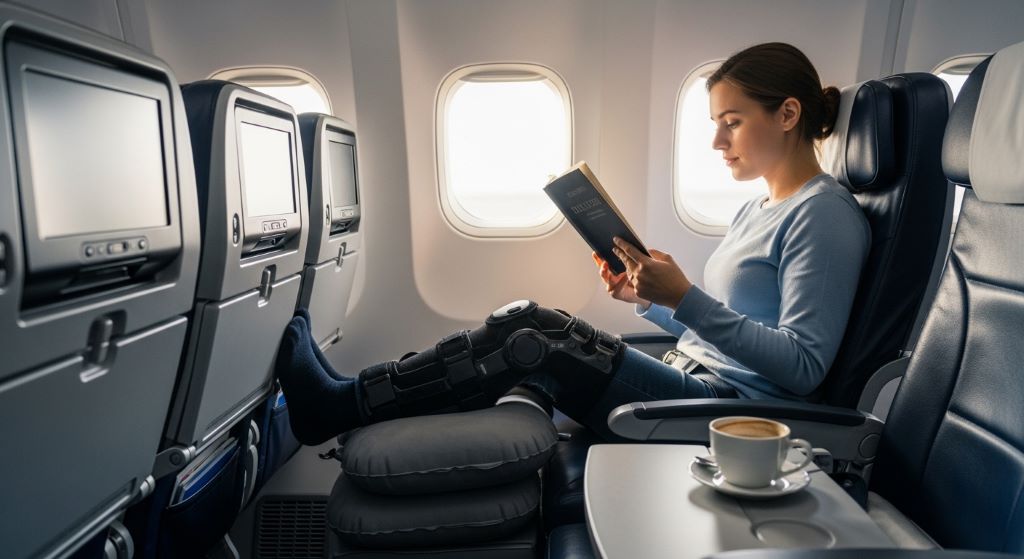
Knee replacement surgery changes your life for the better. However, it also asks for patience and careful planning, especially when you want to travel. Many patients wonder when they can fly, drive, or take a long trip again. The good news is that travel after knee replacement is very much possible. You just need to plan smartly and give your body the care it deserves.
This guide walks you through everything you need to know. From timing your trip to packing the right comfort hacks and recovery essentials, you will feel ready and confident to hit the road again.
When Is It Safe to Travel After Knee Replacement?
Timing is everything. Most surgeons recommend waiting at least six to eight weeks before taking any long trip. Short car rides of under one hour may be acceptable sooner, often within two to three weeks. However, every patient heals at a different pace. Therefore, always consult your surgeon before booking any travel plans.
Flying is a separate consideration. Blood clot risk, also known as deep vein thrombosis (DVT), is higher after surgery. Long flights increase that risk further. Many doctors suggest waiting at least six weeks before flying. Some prefer their patients wait up to three months for international travel.
Before you travel, make sure you can:
- Walk comfortably for at least 10 to 15 minutes
- Bend your knee enough to sit in a regular seat
- Manage your pain without strong medications
- Get in and out of a car or taxi on your own
If you check all those boxes, you are likely ready to start planning.
Talk to Your Doctor First
Never skip this step. Your orthopedic surgeon knows your specific case. They can give you a letter confirming your surgery, which is useful at airport security. They can also advise on blood clot prevention, pain management, and activity limits during travel.
Additionally, ask your doctor about compression stockings. These are highly recommended for both air and road travel. They help keep blood flowing in your legs and reduce swelling. Your doctor may also prescribe a blood thinner for longer journeys.
Choosing the Right Mode of Transport
Different types of travel come with different challenges. Here is a breakdown of what to consider for each.
Traveling by Car
Car travel gives you the most control. You can stop whenever you need to stretch. Plan rest stops every 45 to 60 minutes. Get out of the car, walk around a little, and flex your ankle. This keeps blood moving and reduces stiffness.
Sit in the front passenger seat when possible. It offers more legroom than the back. Place a small pillow under your knee if needed. Avoid driving yourself until your surgeon clears you. Reaction times can be slower when you are on pain medication.
Traveling by Plane
Air travel requires more preparation. Book an aisle seat so you can stand and walk the aisle every hour. Request wheelchair assistance at the airport. This saves your energy and protects your knee from long walks through large terminals.
Arrive early. Security checks take longer when you have a metal implant. You will likely set off the metal detector. Carry your surgeon’s letter and a medical ID card. Inform the security staff politely and calmly.
Keep your carry-on bag light. Lifting heavy bags overhead can throw off your balance. Ask a flight attendant or a fellow passenger for help if needed.
Traveling by Train or Bus
Trains are often a comfortable option. You can move around more freely than on a plane. Choose seats with extra legroom when available. On buses, try to book seats near the front to avoid a long walk down the aisle.
Packing Smart: Comfort Hacks and Recovery Essentials
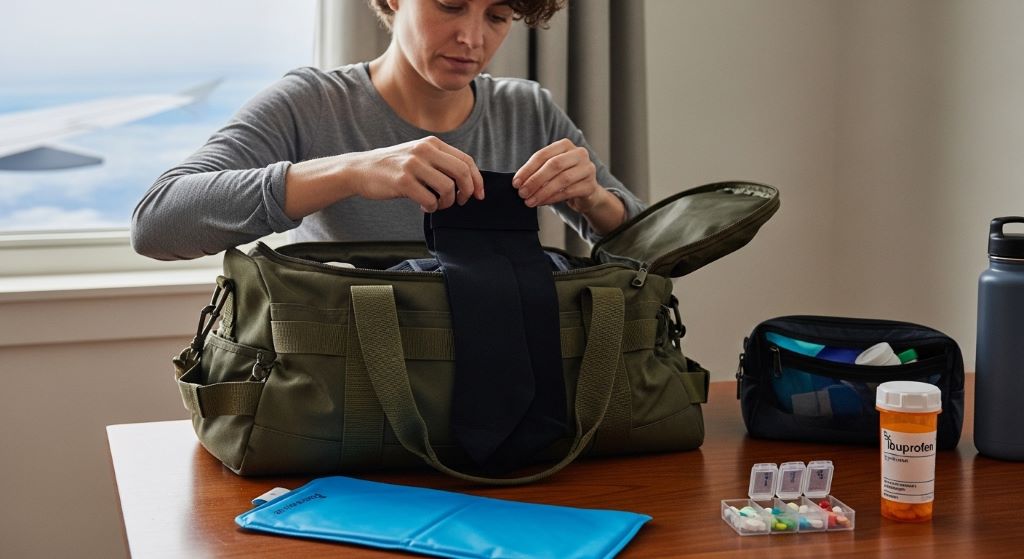
Packing the right items makes a huge difference. These comfort hacks and recovery essentials will keep you safe and comfortable throughout your journey.
Start with your medications. Bring more than you think you need. Keep them in your carry-on bag, not in checked luggage. Carry a list of all your medications in case of an emergency.
Here are the key items to pack:
- Compression stockings (at least two pairs)
- A small ice pack or cooling gel wrap for swelling
- A travel pillow or foam wedge to elevate your knee
- A foldable cane or walking stick for support
- Comfortable, loose-fitting clothing
- Non-slip shoes with good ankle support
- Your surgeon’s letter and medical documents
- A small first-aid kit with bandages and antiseptic wipes
Keep everything organized and easy to reach. You do not want to dig through a heavy bag when you are tired or in pain.
Managing Swelling and Discomfort on the Go
Swelling is normal after knee replacement surgery. Travel can make it worse. However, there are simple ways to manage it.
Elevate your leg whenever you sit. Use your bag, a footrest, or a folded blanket to raise it slightly. This reduces pressure and helps fluid drain from the knee.
Drink water throughout your journey. Staying hydrated helps circulation and reduces the risk of blood clots. Avoid alcohol and excessive caffeine, as both can dehydrate you.
Do ankle pumps regularly. Simply flex and point your foot while seated. Do this for two to three minutes every hour. It is one of the easiest and most effective comfort hacks to prevent clotting and stiffness.
If your knee swells significantly during travel, apply ice as soon as possible. Rest and elevate the leg. If you notice redness, warmth, or severe pain, seek medical help right away. These can be signs of a blood clot.
Choosing the Right Accommodation
Your hotel or rental home matters just as much as the journey. Look for places that are wheelchair accessible or at least step-free at the entrance. Ground-floor rooms are ideal if there is no elevator.
Check that the bathroom has grab bars or handrails. A walk-in shower is much safer than a bathtub after surgery. If grab bars are not available, bring portable suction-cup handles. They are lightweight and easy to install temporarily.
A firm mattress is better than a very soft one. It makes it easier to get in and out of bed. Request extra pillows to prop up your knee while you sleep.
Additionally, choose accommodation that is close to medical facilities. It is always wise to know where the nearest clinic or hospital is, just in case.
Staying Active During Your Trip
Rest is important, but gentle movement is equally necessary. Too much inactivity can slow your recovery. Therefore, try to walk a little each day, even if it is just around the hotel lobby.
Avoid activities that put stress on your knee. Skip hiking on uneven terrain, climbing many stairs, or standing for long periods. Instead, consider gentle sightseeing from a taxi, boat tour, or a scooter rental. Many tourist destinations offer accessible options for visitors with mobility needs.
Stick to your physical therapy exercises. Your therapist likely gave you a home exercise program. Do those exercises every morning. They keep your knee from stiffening and speed up recovery.
Safety Tips at Your Destination
Once you arrive, keep a few key safety habits in mind.
Watch the floor surfaces. Wet tiles, loose rugs, and uneven pavement are all fall hazards. Wear your non-slip shoes at all times, even inside the room.
Be careful in crowded places. Busy markets, tourist attractions, and public transport stations can be hard to navigate. A cane or walking stick gives you extra stability. It also signals to others that you need a little space.
Know the local emergency number. In many countries, this is different from the number you use at home. Save it in your phone before you arrive.
Travel with a companion if possible. Having someone with you adds a layer of safety and makes the trip more enjoyable. They can help carry bags, spot hazards, and assist you if something goes wrong.
Travel Insurance: Do Not Skip It
Travel insurance is not optional after knee replacement surgery. Look for a policy that covers pre-existing conditions. Make sure it includes medical evacuation in case you need emergency care far from home.
Read the fine print carefully. Some policies exclude coverage if you travel too soon after surgery. Check the exclusion clauses and talk to your insurance provider before purchasing.
Keep all your insurance documents accessible. Store digital copies on your phone as well as printed copies in your bag.
Conclusion
Traveling after knee replacement surgery is absolutely achievable with the right preparation. The key is to plan ahead, listen to your body, and never rush the process. Start by getting medical clearance from your surgeon. Choose your mode of transport wisely. Pack all the comfort hacks and recovery essentials you need. Manage swelling, stay hydrated, and move regularly during the journey.
Choose safe, accessible accommodation and keep safety habits in mind at your destination. Most importantly, do not forget travel insurance. With all these steps in place, you can enjoy travel again without putting your recovery at risk. Your knee has come a long way. Now, so can you.
Frequently Asked Questions
Question 1: How soon can I fly after knee replacement surgery?
Most surgeons recommend waiting at least six weeks before flying. For long-haul international flights, waiting up to three months is often advised. Always get your doctor’s approval before booking any flight.
Question 2: What is the biggest risk of traveling after knee replacement?
The biggest risk is deep vein thrombosis, or DVT. This is a blood clot that can form in the leg. Long periods of sitting without movement increase this risk. Wearing compression stockings and doing regular ankle exercises can help prevent it.
Question 3: Can I go through airport security with a knee replacement?
Yes, you can. However, the metal implant will likely trigger the security detector. Carry a letter from your surgeon and a medical ID card. Inform security staff before going through the scanner.
Question 4: What should I pack for travel after knee replacement surgery?
Pack compression stockings, a cooling wrap or ice pack, a travel pillow for elevation, your medications, non-slip shoes, a walking aid, and your medical documents. These are the core recovery essentials for any trip.
Question 5: Is it safe to drive after knee replacement surgery?
You should not drive until your surgeon gives you the go-ahead. This typically happens between six and eight weeks after surgery. Driving requires quick reaction times, which can be affected by pain and medication.
Related Topics:
How to Monitor Crop Health Using Satellites Easily
How to DIY Homemade Suppositories for Health Natural Wellness Use