
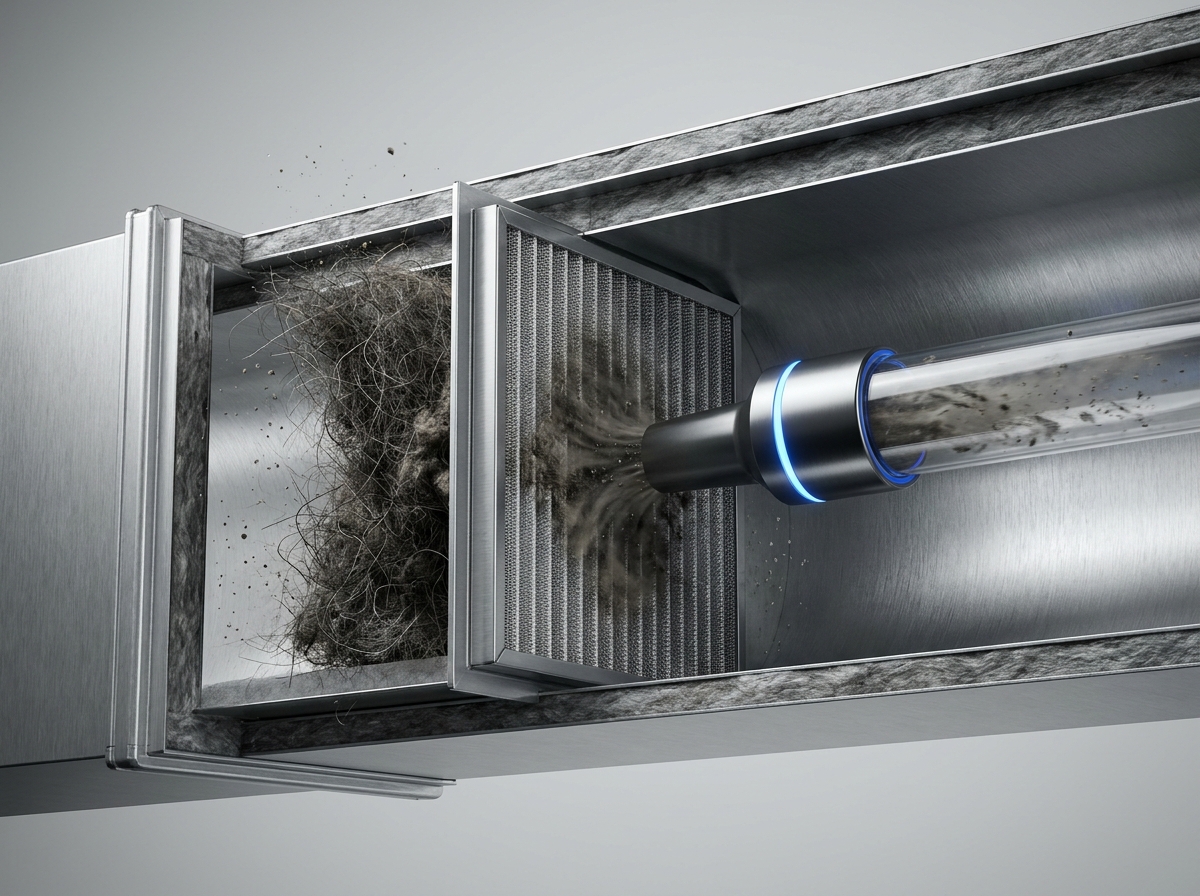
Heavy pet shedding, salon activity, or multiple long-haired occupants can place a much larger debris load on an HVAC system than ordinary household dust alone. Loose strands often gather at return grilles first, yet finer hair fragments and lint can travel farther into accessible ductwork and equipment areas. High-frequency HVAC cleaning may make sense in these environments when inspections show that hair is accumulating faster than routine filtration and housekeeping can control.
Heavy Hair Loads Build Up Differently Than Fine Dust
Long strands tend to snag on grille edges, duct seams, screws, insulation, and rough interior surfaces instead of settling evenly. Tangled hair can then trap lint, dander, fibers, and dust, creating thicker mats that become harder to remove once they compact around bends or return openings.
Dense buildup may also narrow airflow paths near heavily used returns. Rather than assuming a fixed cleaning schedule is necessary, technicians can inspect those areas and determine whether the amount of debris justifies more frequent service than a typical home would need.
Why Do Return Ducts Collect So Much Hair?
Return grilles pull room air back toward the HVAC equipment, which makes them natural collection points for material lifted from floors, upholstery, bedding, and pet areas. Homes with several animals may see visible strands accumulate quickly around lower returns because normal movement repeatedly stirs hair into the surrounding air.
Nearby furnishings can make the problem worse if a return sits beside a pet bed, grooming station, carpeted hallway, or frequently used sofa. Homeowners searching for HVAC cleaning near me can ask whether the service includes accessible return trunks, since cleaning only supply vents leaves one of the main hair-collection pathways untouched.
Filters Help, but Hair Can Bypass Them
Proper filters capture a portion of the debris moving through the return side, but their effectiveness depends on fit, condition, and system design. Gaps around the filter frame may allow hair and dust to slip around the media, while an overloaded filter can restrict airflow before the scheduled replacement date arrives.
Frequent inspection becomes more useful than relying on the calendar in homes with severe shedding. During HVAC cleaning in Columbia TN, technicians may also notice filter bypass, loose racks, or dust trails around the filter compartment that suggest debris is reaching farther into the system than it should.
High-Frequency Cleaning Should Follow Actual Buildup
More service is not automatically better, even in a home with multiple pets. Repeated cleaning without meaningful contamination wastes time and may expose flexible or lined duct materials to unnecessary agitation.
Inspection-based scheduling offers a better approach. Columbia HVAC cleaning may need to happen more often after seasonal shedding, grooming changes, renovations, or periods when filters have loaded unusually fast, while quieter months may require no additional duct service at all.
Source Removal Handles Matted Hair Better Than Surface Vacuuming
Household vacuums can clear register covers and loose material close to the opening, but tangled debris farther inside branches and trunks often remains beyond reach. Professional source-removal equipment combines strong negative pressure with agitation tools that loosen hair and attached dust from accessible surfaces.
Different duct materials require different techniques during HVAC cleaning. Sheet metal may tolerate brushes or stronger agitation, while flexible ducts and internal liners often need gentler air tools to avoid tearing, crushing, or damaging the surface while the hair is being removed.
Pet Dander and Hair Are Not the Same Contaminant
Visible fur receives most of the attention because homeowners can easily see it gathering around grilles. Dander consists of much smaller skin particles that may travel farther with airflow and become mixed into dust deposits even when little obvious hair is present.
Removing accumulated material from accessible ductwork can reduce one stored source of pet-related debris, but cleaning does not make a home free of allergens. Grooming, washing pet bedding, vacuuming floors, and maintaining suitable filtration still play a larger day-to-day role in managing what continues entering the indoor environment.
Blower Areas Can Collect Debris That Slips Past the Filter
Fine hair, lint, and dust that bypass filtration may reach the blower compartment and cling to nearby surfaces. Deposits on a blower wheel can affect how efficiently its blades move air, particularly if buildup becomes uneven or mixes with sticky residue.
Mechanical issues should still be separated from cleaning needs. Worn motors, bearings, damaged wheels, electrical faults, and airflow-design problems require qualified HVAC repair even if technicians find heavy hair contamination around the equipment.
Grooming Habits Can Change How Fast the System Gets Dirty
Regular brushing outdoors or in an easy-to-clean area can reduce the amount of loose hair available to migrate toward return vents. Frequent floor cleaning around high-shedding pets also prevents strands from forming the larger clumps often found near lower grilles.
Placement matters as well. Keeping pet beds, grooming tables, laundry piles, and fabric storage away from return openings can reduce the amount of hair repeatedly pulled toward the system during normal heating and cooling cycles.
Commercial and Multi-Pet Homes Need a Different Maintenance Rhythm
Boarding areas, grooming businesses, home kennels, or residences with several shedding animals may accumulate debris at a pace that standard residential maintenance schedules do not anticipate. Higher occupancy and frequent brushing can introduce far more hair into nearby airflow pathways over a short period.
Tracking filter condition, visible return buildup, and inspection findings gives property owners a practical way to decide when another cleaning is warranted. That record is more useful than scheduling service simply because a certain number of months have passed.
Severe Hair Buildup Calls for a Targeted Cleaning Strategy
A system dealing with unusually heavy hair needs attention focused on where that material is actually collecting. Return trunks, accessible branches, filter compartments, and nearby HVAC pathways may need more attention than areas showing only light normal dust.
For Columbia homes where shedding creates a recurring maintenance problem, Mr. B’s Air Duct Cleaning can address the buildup that regular vacuuming cannot reach. Their service can remove accumulated hair and attached debris from accessible ductwork, helping homeowners manage unusually heavy loads without treating unnecessary cleaning as the default.