Production growth can make outsourced finishing feel less convenient than it once did. Higher freight costs, longer lead times, tighter schedules, and increasing part volume often push manufacturers to compare outside coating services with bringing the work under their own roof. Buying equipment makes the most sense when better control over timing, quality, and long-term finishing costs outweighs the investment and added responsibility of running the process internally.
Start With the True Cost of Outsourcing Each Finished Part
Outsourcing expenses extend well beyond the coating price listed on an invoice. Freight, packaging, loading labor, minimum order charges, rejected parts, rush fees, and extra inventory held during turnaround can raise the actual finishing cost considerably.
Accurate comparisons should calculate those expenses across a full year and divide them by finished production volume. Shops researching Reliant powder coating equipment for sale can then compare their present outsourcing spend against equipment payments, labor, energy, powder, maintenance, and floor-space requirements.
When Does Production Volume Justify Bringing Coating In-House?
Steady volume usually strengthens the case for owning a finishing line because equipment costs can be spread across more parts. Consistent weekly production also gives operators regular experience, which makes it easier to establish repeatable preparation, application, and curing procedures.
Irregular demand tells a different story because a powder coating booth and curing oven still occupy space when production slows. Manufacturers should estimate realistic annual throughput rather than using their busiest month to justify a Reliant powder coating equipment package that may remain underused for much of the year.
Faster Turnaround Can Change the Value of In-House Finishing
Scheduling becomes easier when coated parts no longer need to leave the facility and wait in another company’s production queue. Internal finishing can shorten the gap between fabrication and assembly, especially for replacement parts, prototypes, short production runs, or orders with tight delivery dates.
Unexpected changes also become easier to handle because the production team controls its own finishing schedule. Reliant powder coating systems may suit companies that need greater flexibility, provided staffing and oven capacity can keep pace with fabrication output without creating a new bottleneck.
Quality Control Becomes Easier to Track Under One Roof
Direct oversight allows manufacturers to monitor surface preparation, grounding, film thickness, cure conditions, color consistency, and handling from one batch to the next. Problems can be traced closer to their source rather than discovered after finished components return from an outside coater.
Detailed records help operators connect coating defects with pretreatment conditions, gun settings, powder storage, or oven performance. Reliant powder coating ovens can become part of that controlled process when equipment is properly sized for the part mass, rack arrangement, finish specification, and required production rate.
Floor Space and Utilities Can Decide Whether Ownership Makes Sense
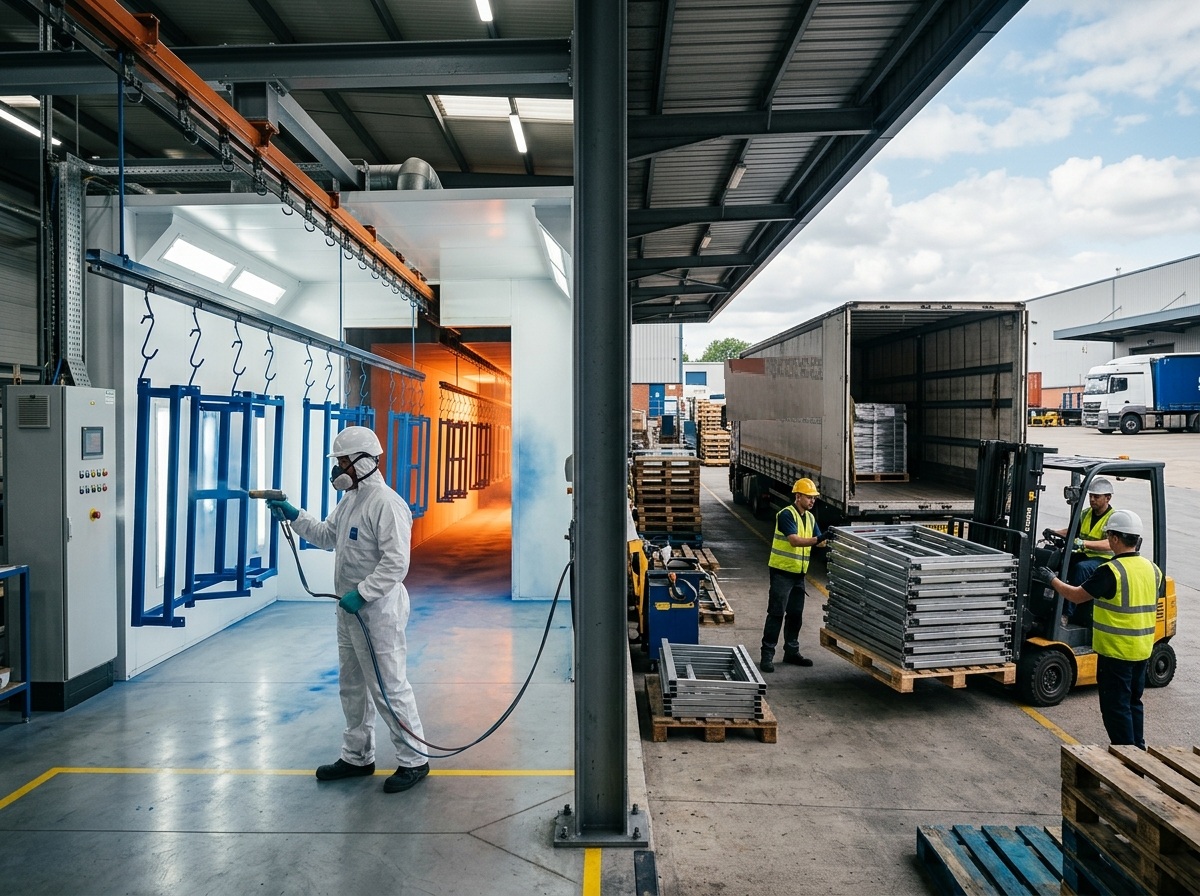
Physical space often limits an otherwise attractive equipment purchase. A complete powder line needs room for preparation, application, curing, cooling, material movement, maintenance access, powder storage, and safe distances around heated equipment.
Utility requirements deserve equal attention before installation begins. Facilities considering a Reliant industrial powder coating oven should review electrical capacity, gas supply, exhaust needs, compressed air, ventilation, building clearances, and local code requirements before assigning a final location.
How Much Labor Does an Internal Powder Coating Line Really Need?
Equipment ownership adds responsibilities that an outside finishing company currently handles. Employees must load parts, prepare surfaces, apply powder, inspect coatings, manage color changes, clean equipment, monitor cure cycles, and maintain a safe workspace.
Training affects both quality and productivity because powder application involves more than pointing a spray gun at metal. Buyers looking at a Reliant powder coating oven for sale should also consider who will supervise oven operation, track substrate temperature, perform routine maintenance, and respond when production conditions change.
Compare Long-Term Control Against the Upfront Equipment Investment
Capital cost matters, but purchase price alone does not show whether an internal line will produce a worthwhile return. Financial planning should include installation, utilities, pretreatment equipment, booths, ovens, racks, filters, powder inventory, labor, maintenance, permits, insurance considerations, and expected equipment life.
Payback calculations become more useful when manufacturers include benefits that are harder to see on a simple invoice comparison. Reduced shipping, less work-in-process inventory, faster rework, better scheduling, improved finish consistency, and greater control over customer deadlines can all add measurable value.
Build the System Around the Parts the Shop Actually Produces
Part size, weight, geometry, material, coating specification, and daily quantity should guide the final equipment configuration. Oversized products may require larger booth openings and heating chambers, while high-volume small parts may benefit from layouts designed around faster loading and continuous movement.
Companies seeking to streamline finishing operations can work alongside industry specialists like Reliant Finishing Systems to select tailored machinery setups. Their experienced team designs customized spray enclosures, wash systems, and cure setups that lower operating costs while elevating overall product quality. Partnering with proven equipment providers ensures smooth system integration and reliable production performance for decades to come.